
Ines Schweigert

Dr. Ines Dedovic earned her doctorate at the Institute for Imaging and Computer Vision in the Department of Electrical Engineering at RWTH Aachen University, Germany. She has worked as a researcher at the Research Center Jülich and is currently employed as a software developer for camera systems at an automation company, Jonas & Redmann. For over 10 years, Ines has also worked as a 3D animator, comic artist, and illustrator for textbooks. In this book, she uses her art and technical skills to create intuitive visuals of technical concepts.

books & videos by Ines Schweigert

Grokking AI Applications

  • July 2026
  • ISBN 9781633435872
  • 272 pages
  • printed in black & white
print book available Jul 30, 2026
ePub + liveBook available Jul 30, 2026

“Clear, practical, and focused on getting you from basics to real-world applications fast.”
—Michele Pacifico, Nestlé


Grokking AI Applications: An illustrated guide for programmers and other curious people shows you how to create AI applications like chatbots, agents, and systems customized to use your own data—even if you’ve never built one before! Supporting his explanations with graphics and using concrete examples and hands-on implementations, author Andrea De Mauro gets you thinking about system design and mental models rather than boilerplate code and syntax debugging. You’ll quickly focus on the right level: how to manage prompts, data, and application components to get the results you want.

You’ll start with a bare-bones chatbot, as you learn how to create good prompts and improve accuracy using Retrieval Augmented Generation (RAG). To help your applications live in the real world, the book discusses how to connect them to document collections, structured databases, and CRM tools. You’ll build on this foundation, creating your own agents and equipping them with tools for data analysis and complex reasoning. Reviewer Julien Pohie of Thoughtworks commented, “The emphasis on multi-agent orchestration aligns perfectly with modern engineering best practices.”

Step-by-step guidance, rich diagrams, and workflow summaries help you stay oriented, even through advanced material. To emphasize conceptual and design thinking, you’ll start each project using the low-code development tool Langflow. For readers who want to go deeper, every example also includes fully-annotated Python implementations. You’ll see the code, libraries, APIs, and data behind each application, along with practical advice on how to deploy and monitor your applications.

Compact by design, this fast-paced book includes eight fully illustrated chapters that build intuition through engaging, memorable, and relatable real-world scenarios. As you read, you’ll experience a shift from AI as the familiar conversational chatbot to AI as an essential part of your application and, further, to the design of multi-agentic teams with specialized roles and supervised coordination.

And you’ll enjoy every page of the journey!

Illustrating technical books: From getting ideas to completing a figure

  • Course duration: 34m

An expert in Computer Vision and Image Processing demonstrates how to create entertaining graphics for complex concepts such as algorithms for massive datasets.
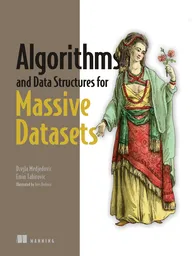
Algorithms and Data Structures for Massive Datasets

  • May 2022
  • ISBN 9781617298035
  • 304 pages
  • printed in black & white

Algorithms and Data Structures for Massive Datasets introduces processing and analytics techniques for large distributed data. Packed with industry stories and entertaining illustrations, this friendly guide makes even complex concepts easy to understand. You’ll explore real-world examples as you learn to map powerful algorithms like Bloom filters, Count-min sketch, HyperLogLog, and LSM-trees to your own use cases.
