1 What’s a bug bash?
Software projects rarely enjoy perfect, exhaustive testing, and even dedicated QA teams can overlook real-world use cases. This chapter introduces the bug bash as a practical, time-boxed, whole-company testing event held before a milestone. By inviting people from across the organization to “pound the product” from varied perspectives, teams surface unexpected defects and insightful feedback quickly, build confidence in release readiness, and make the activity engaging and fun. The Bash IT vignette illustrates a common dilemma—limited time, budget, and testers—answered by leveraging the people you already have.
Bug bashes deliver tangible and intangible gains. Tangibly, they uncover surprising bugs and wide-ranging feedback early, reducing maintenance costs, protecting product reputation, and accelerating delivery by concentrating discovery and subsequent fixes instead of firefighting in production. Involving insiders yields higher-quality reports grounded in domain knowledge, while diversity of roles, backgrounds, and abilities shines a light on blind spots standard testing can miss. Intangibly, bug bashes foster ownership, trust, and shared understanding: participants learn how the product really works, improve testing skills, align on what “good” looks like, and strengthen relationships and morale through collaborative exploration.
Running a successful bug bash requires clear structure and preparation. Think of it like a game: define a mission and scope, set a firm time boundary, choose the setting (on-site or online) and environments, appoint a strong facilitator, recruit diverse players, provide crisp instructions and guided scenarios, and establish how results will be captured, triaged, and acted on—optionally adding pairing or light gamification. Beforehand, align the event to a meaningful milestone, secure leadership buy-in, and plan logistics, communication channels, and tracking tools. Afterwards, embrace the aftermath by reviewing findings, fixing prioritized issues, and reinforcing a bug-bash mindset so each event contributes to a stronger product and a more connected organization.
Different roles bring different perspectives to the event that help discover various bugs
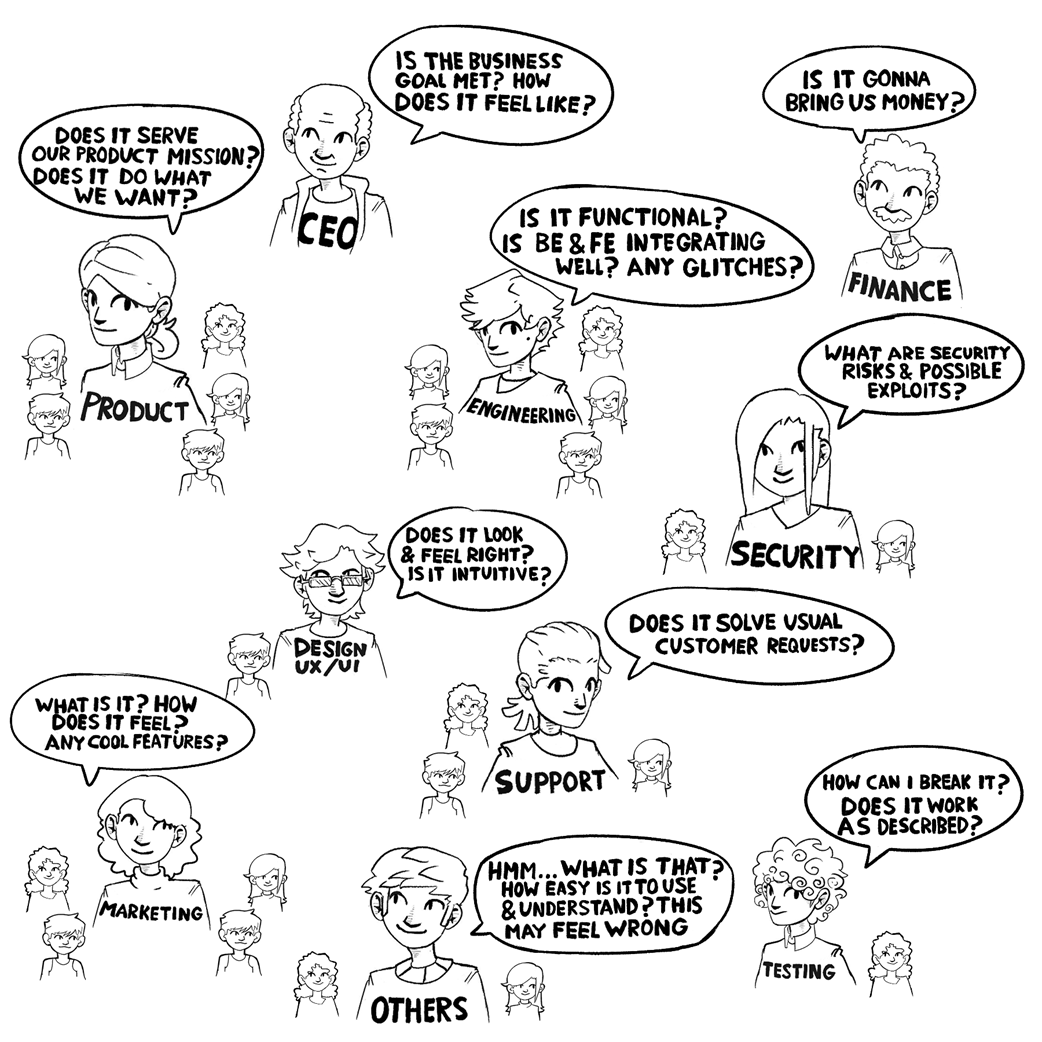
In a bug bash, we bring more than our roles: we bring who we are as people, and each of us has a unique combination. Various aspects like age, cultural background, or even hobbies, which affect how we test and what bugs we notice.

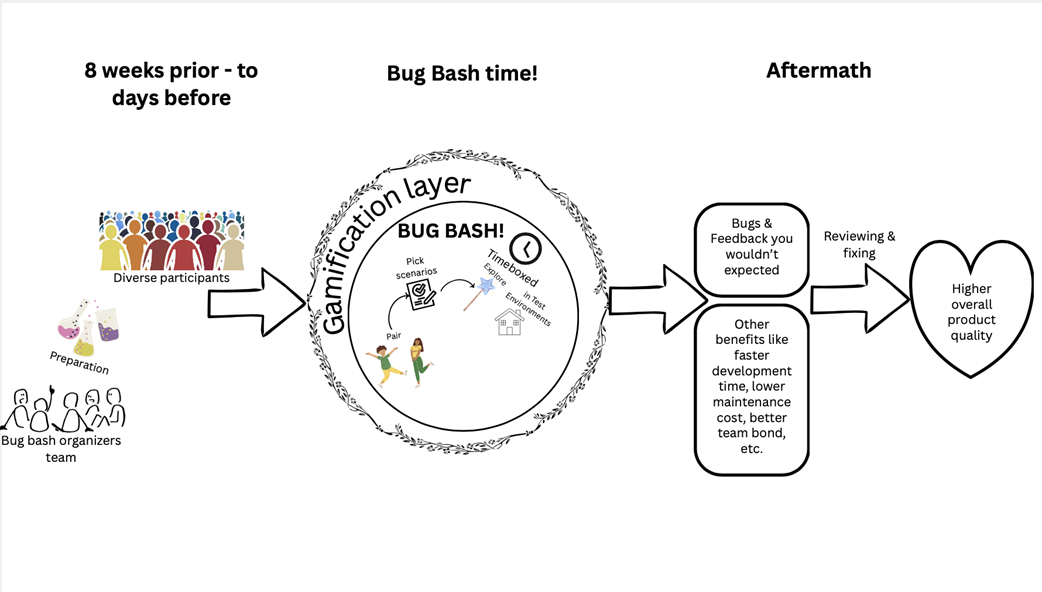
The anatomy of a bug bash. On the left, you see what comes into the bug bash, the middle is the event itself and its aspects, while on the right, there are the outcomes of the event. All this leads to a better quality product. (will be redrawn)
Summary
- A bug bash is a timeboxed, whole-company testing event.
- Participants come from all professional areas of the company.
- The goal of a bug bash is to gather numerous bugs and insights for improvements based on the diverse perspectives of participants, which vary depending on their role and background.
- Bug bashes efficiently and cost-effectively discover bugs, enabling you to improve your product quality quickly.
- Bug bashes have both tangible outcomes (such as bugs and feedback) and intangible benefits (increased sense of ownership, boosted team morale, or a better understanding and confidence in the product and company overall).
- When organizing a bug bash, plan it well in advance of the actual event. Know what you will test, if you can have it, where you will have it, and who you want to participate.
FAQ
What is a bug bash?
A bug bash is a time‑boxed, whole‑company testing event held before a milestone (often a release) where people from diverse roles “pound the product” to find bugs, surface improvement ideas, build confidence in quality, and have fun.
Why should we run a bug bash?
It delivers two sets of benefits:
- Tangible: uncover unexpected bugs, collect fresh feedback, lower maintenance costs, improve product reputation, and speed up delivery.
- Intangible: grow ownership, trust, and a sense of belonging across teams while teaching product knowledge and testing skills.
Who should participate in a bug bash?
Anyone who cares about the product: engineers, designers, product managers, QA, security, sales, support, leadership, and sometimes select customers. Diverse roles and backgrounds reveal different issues and perspectives.
When is the best time to host a bug bash?
Before important milestones, such as an upcoming release or compliance/accessibility initiative. Teams also run them to revisit product quality, onboard and share knowledge, align on “what success looks like,” or for team‑building—periodically or ad hoc.
How long does a bug bash last and how is it structured?
It’s intentionally time‑boxed—often a few hours. Successful events feel like a “game” with clear mission and scope, a set duration, a facilitator, prepared scenarios, instructions, a defined setting (on‑site/online), and a results process (how to capture and review findings). Pairing and light gamification can boost engagement.
What preparation is needed before running one?
- Set the mission/scope and decide the milestone or focus area.
- Secure leadership buy‑in and recruit participants.
- Ready environments, data, access, and tooling (shared doc, comms channel, bug tracker).
- Draft test scenarios/instructions and a timeline, and plan how you’ll triage results afterwards.
What should participants report during a bug bash?
Everything that doesn’t feel right: functional defects, accessibility/usability issues, security or performance concerns, confusing copy/flows, and suggestions or questions that challenge assumptions—not just traditional “bugs.”
How does a bug bash help reduce costs and speed delivery?
It catches issues before release, avoiding expensive rework and production firefighting. Concentrated discovery followed by focused fixing reduces context switching, preserves flow, and accelerates subsequent feature delivery.
How is a bug bash different from hiring external or crowdsourced testers?
Bug bashes leverage internal, motivated contributors who know the domain and report higher‑quality, actionable issues with less “noise.” They’re faster to organize, more cost‑effective, and strengthen internal alignment and ownership.
Do we fix bugs during the bug bash or afterward?
Usually, the event is for rapid discovery and reporting due to the timebox. Many teams then schedule a dedicated “bash bugs” window to triage and fix findings promptly.

 Bug Bash ebook for free