1 The Problem Go Was Built to Solve
Go was created in 2007 at Google by Ken Thompson, Rob Pike, and Robert Griesemer to address the frustrations of large-scale software development: slow builds, difficult concurrency, and tools that no longer fit modern engineering needs. Rather than chasing academic novelty, they aimed for a practical language that would make everyday programming faster, safer, and less fragile. The result was a design centered on five goals: fast compilation, efficient execution, ease of programming, built-in concurrency support, and robust tooling.
A major part of Go’s value comes from how it combines speed with safety. Its compiler is designed to work quickly by limiting dependency complexity, rejecting unused imports, and using type inference to keep code concise without losing static guarantees. That means developers get rapid edit-run cycles while also catching type errors before deployment. Go also executes efficiently through garbage collection, self-contained static binaries, and support for calling existing C and C++ code, which makes it suitable for production systems that need both performance and practical deployment.
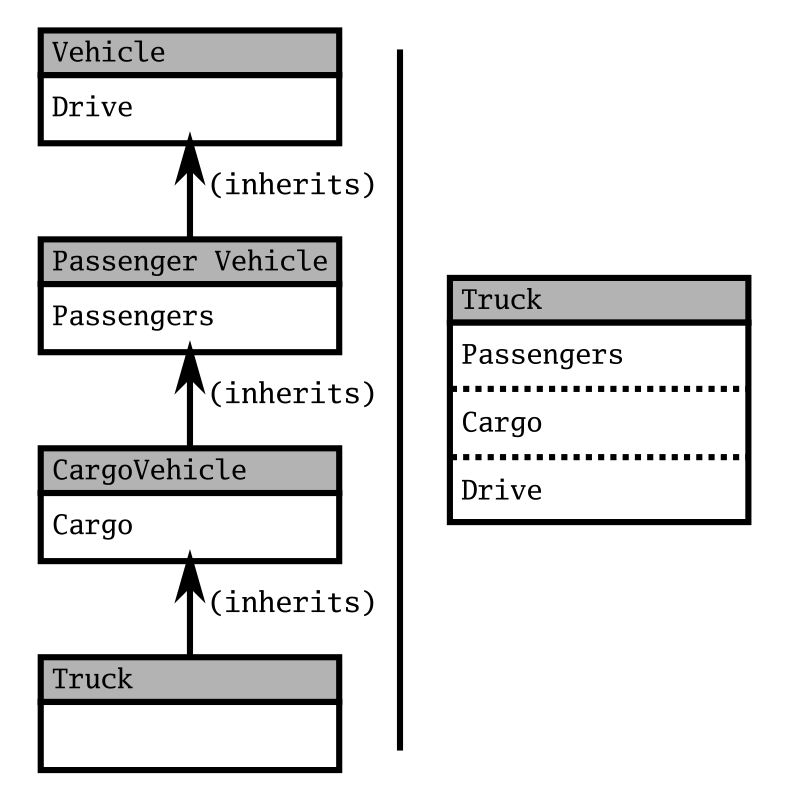
Go also treats concurrency and simplicity as first-class design concerns. Goroutines, channels, and context provide a coherent model for concurrent programming that avoids much of the manual locking and synchronization complexity found in other languages. At the same time, Go intentionally keeps the language small, favoring composition over inheritance and relying on interfaces for flexible design. Its standard toolchain reinforces that philosophy by providing built-in commands for building, formatting, testing, analyzing, documenting, and managing dependencies, helping teams work consistently and efficiently at scale.
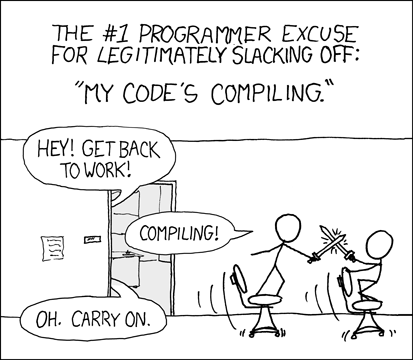
Working Hard? (via XKCD)
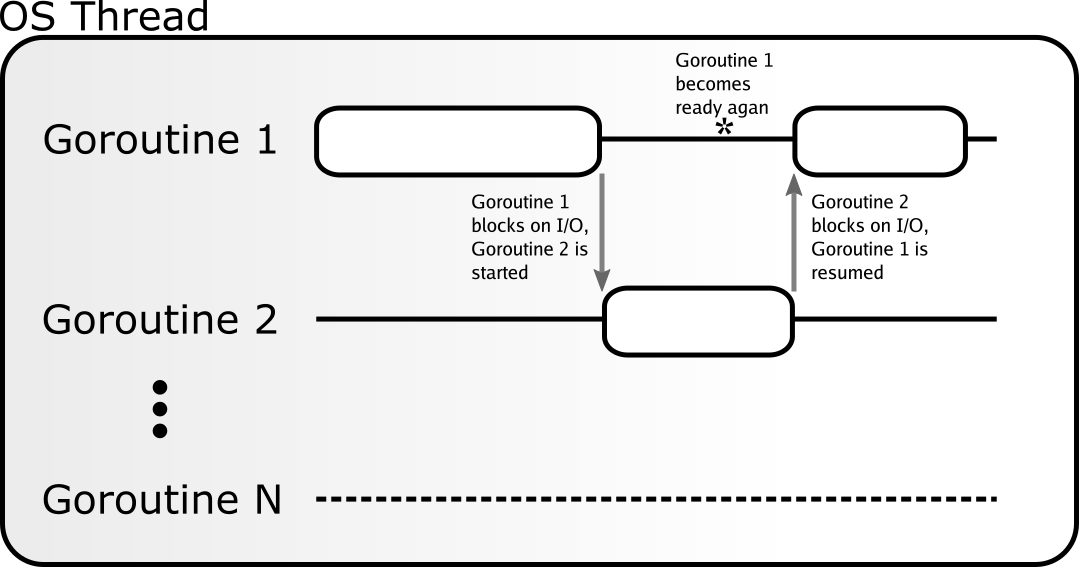
Many Goroutines Execute On a Single OS Thread
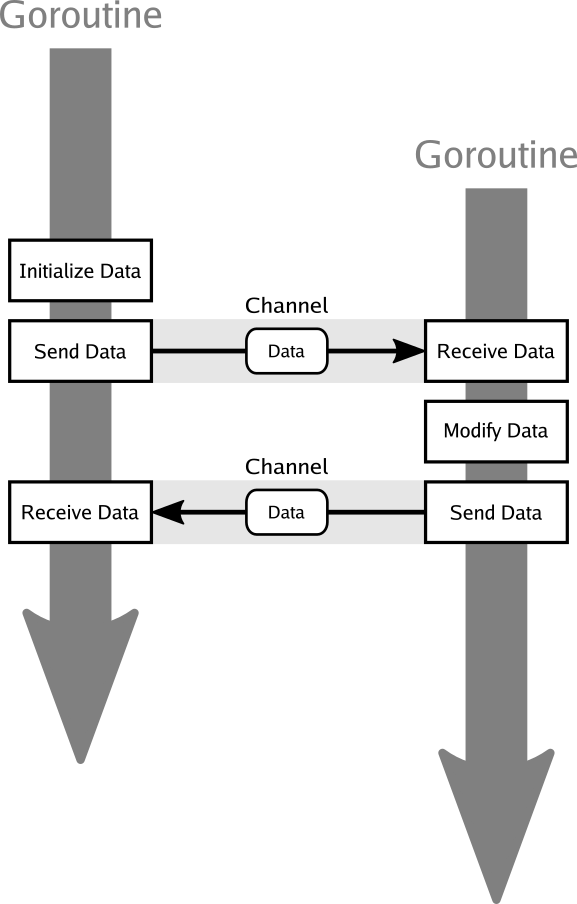
Channels Pass Data Between Goroutines
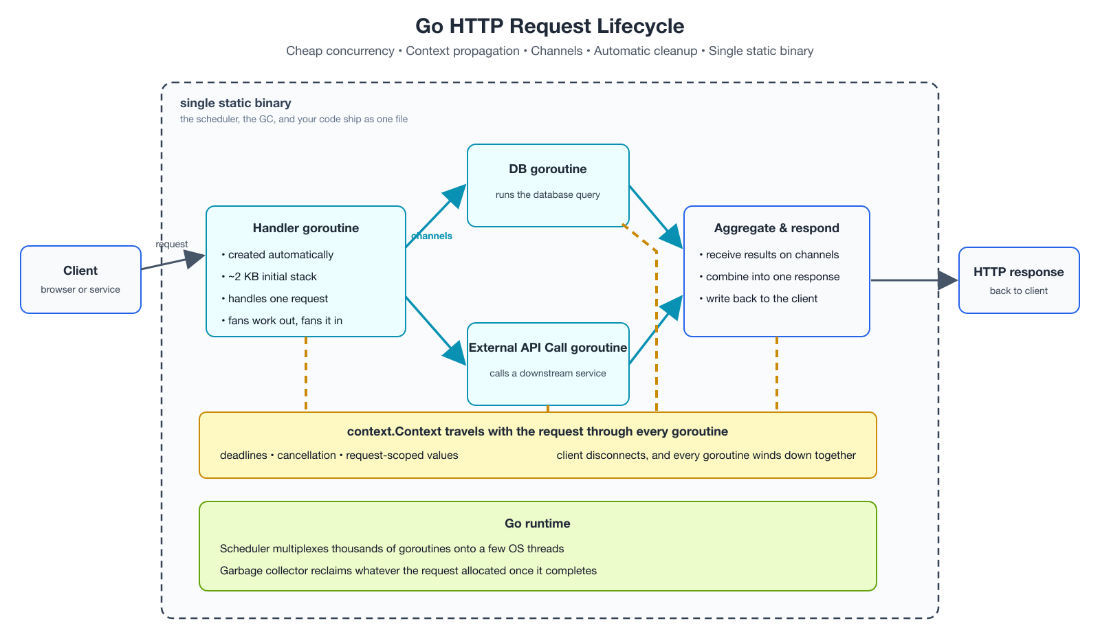
The Lifecycle of a Single HTTP Request
Inheritance vs. Composition
Summary
- Go was designed in 2007 by Ken Thompson, Rob Pike, and Robert Griesemer to solve real software engineering problems at scale.
- Fast compilation and strict type-checking close the gap with dynamic languages without sacrificing correctness.
- Go compiles to a single, statically linked binary with no runtime dependencies, making deployment as simple as copying a file.
- Concurrency is built into the language, not bolted on.
- Go’s type system favors composition over inheritance.
FAQ
Why was Go created in the first place?
Go was created in 2007 by engineers at Google to address the pain of huge codebases, slow builds, and difficulty writing safe concurrent code in C++. The goal was to build a language that would make large-scale engineering faster, safer, and less fragile.Who designed Go?
Go was designed by Ken Thompson, Rob Pike, and Robert Griesemer. They brought extensive experience from systems programming, compiler work, Unicode, Unix, and large-scale software development.What were the five original design goals of Go?
The five goals were fast compilation, efficient execution, ease of programming, excellent built-in support for concurrency, and robust tooling. These goals shaped nearly every major design decision in the language.How does Go achieve fast compilation?
Go compiles quickly because of deliberate constraints like no circular imports, required use of all imports, and a compiler that only checks directly imported packages. This reduces the amount of work the compiler must do and keeps feedback loops fast.Why is type safety important in Go?
Go’s static type system catches many errors at compile time instead of letting them become runtime surprises. This helps eliminate entire classes of bugs before code is deployed.What makes Go efficient at runtime?
Go combines native compiled performance with managed memory through a concurrent garbage collector. It also produces self-contained static binaries, which simplifies deployment and reduces operational overhead.How does Go support concurrency differently from many other languages?
Go treats concurrency as a language primitive rather than just a library feature. It uses goroutines for lightweight concurrent execution, channels for safe communication, and context for cancellation and deadlines.What is a goroutine?
A goroutine is a function that runs concurrently with the rest of the program. Goroutines are much cheaper than OS threads, so Go programs can run thousands of them efficiently.Why does Go emphasize simplicity?
Go deliberately leaves out features like classes, inheritance, operator overloading, and exceptions to keep the language small and easy to understand. Instead, it favors composition and interfaces, which often lead to clearer and more maintainable code.What tools come with a Go installation?
Go includes a standardized toolchain such asgo build, go run, go fmt, go test, go vet, go doc, and go mod. These tools are built in to keep formatting, testing, dependency management, and documentation consistent across projects.
 Go in Action, Second Edition ebook for free
