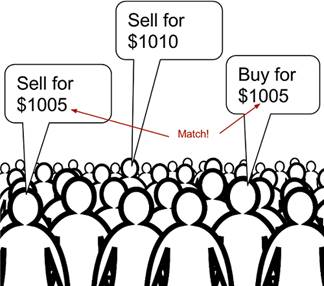
Overview

1 Introduction to Bitcoin

This chapter introduces Bitcoin at a high level and sets expectations for learning how it works and why it matters. Bitcoin is presented as permissionless, decentralized digital cash run by a global network of equal, independent nodes that maintain a shared ledger called the blockchain. Anyone can participate—users, merchants, service providers, exchanges, and developers—and anyone can run a node to verify their own information. A payment flows through four main steps: a user creates and signs a transaction; nodes validate and relay it; miners order transactions into blocks and append them to the blockchain; and wallets notify users while managing private keys. The key idea is that ownership changes by updating the blockchain rather than “sending” coins directly.

The chapter then contrasts Bitcoin with problems in today’s financial system: billions are unbanked due to cost, documentation, or discrimination; electronic payments can be traced, censored, frozen, or seized; many fiat currencies face inflation or even hyperinflation; and cross‑border transfers are slow and expensive. Bitcoin’s approach tackles these issues by removing central control, treating all participants equally, and making rule changes difficult without broad consensus. It has a strictly limited, predictable supply (capped at 21 million, with issuance declining over time) that resists monetary debasement, and its Internet‑native design makes it borderless, enabling direct global transfer with quick visibility and strong settlement finality. Running your own node eliminates reliance on third parties for transaction verification.

Practical uses covered include savings secured by private keys, cheaper remittances, and shopping without sharing sensitive card data, as well as market‑driven pricing and volatility that fuels speculation. Beyond payments, Bitcoin can anchor proofs (proof of existence) or represent transfers of ownership by embedding small data in transactions. The chapter also notes limits: fees make tiny payments impractical and confirmations add delay, both mitigated by emerging layers such as the Lightning Network; users must manage key security and consider risks like price swings or potential software/cryptography issues. Finally, it surveys other cryptocurrencies and explains how network effects favor Bitcoin’s adoption, motivating the book’s focus on Bitcoin itself.

1. The Bitcoin network and its ecosystem.
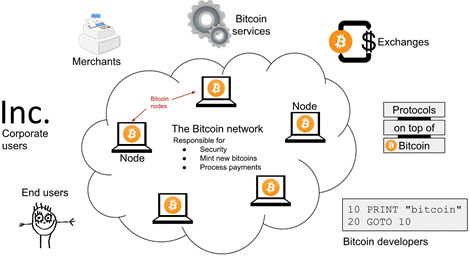
actors.png
A Bitcoin payment. The payment is processed in 4 steps.
payment overview.png
Step 1: Alice creates a transaction, signs it and sends it to one or more Bitcoin nodes in the Bitcoin network.
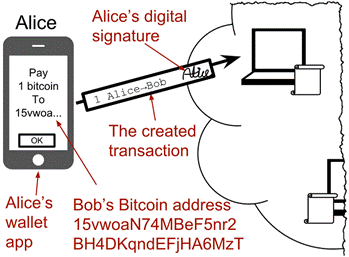
payment overview step 1.png
Alice has sent her transaction to a node in the network. The node will verify the transaction and forward it to other nodes. Eventually the transaction has reached all nodes in the network.
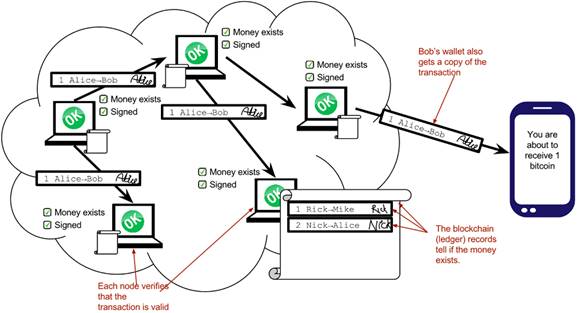
payment overview step 2.png
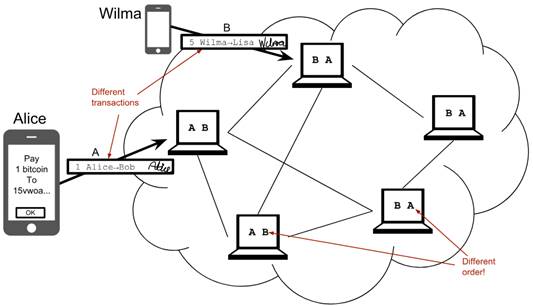
Transactions arrives in different order at different nodes. If they would all write the transactions to the blockchain, the different nodes' blockchains would differ.
One node takes the lead and tells the others what order to add the transactions in. The other nodes verify the block and update their blockchain copies accordingly.
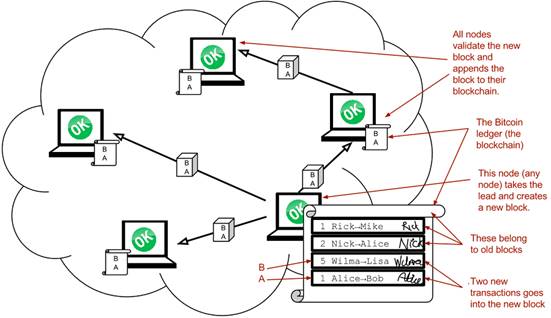
payment overview step 3.png
Bob’s wallet have asked a node to notify the wallet upon activity in his Bitcoin address. Alice pays to Bob’s address, and the node has just written the transaction to the blockchain, so it notifies Bob’s wallet.
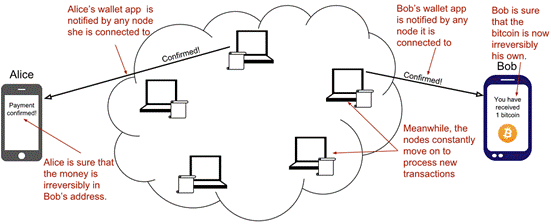
payment overview step 4.png
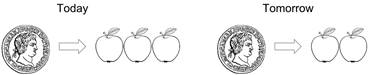
8. Inflation
inflation.png
Centralized and decentralized services
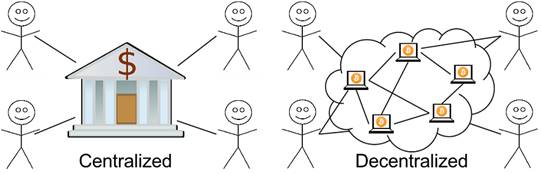
centralized decentralized.png
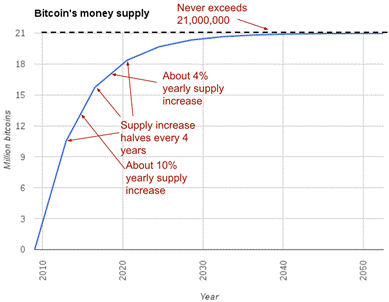
The supply of bitcoins over time
money supply.png
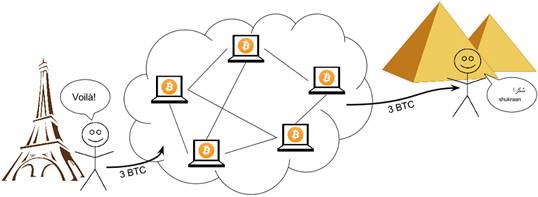
Bitcoin is borderless
borderless.png
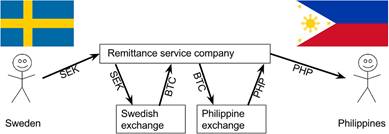
remittance company.png
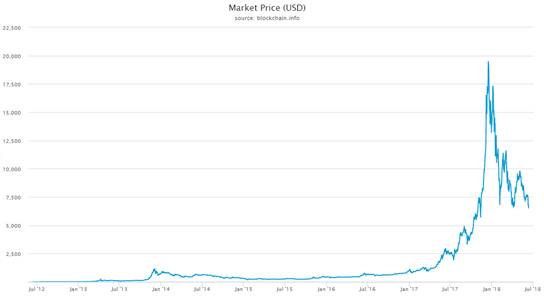
   Price in USD since beginning of Bitcoin
market.png

    Recap

In this chapter you learned that

  • Bitcoin is global, borderless money, that anyone with an internet connection can use.
  • Bitcoin is used by many different actors, like savers, merchants, traders for many different purposes like payments, remittances and savings.
  • A network of computers, the Bitcoin network, verifies and keeps records of all payments.
  • A transaction goes through the steps: Send transaction, verify transaction, add transaction to the blockchain, notify recipient and sender wallet.
  • It solves problems with inflation, borders, segregation and privacy by providing limited supply, decentralization and borderlessness.
  • There are several alternative cryptocurrencies apart from Bitcoin, for example Ethereum, Zcash and Namecoin.
  • A (crypto)currency needs to have enough users and activity to be useful. It’s called network effect.

FAQ

What is Bitcoin?Bitcoin is a decentralized digital cash system. It lets people send value directly to one another over the Internet without banks or other intermediaries. The network is run by thousands of independent computers (“nodes”) around the world, not by any company or government.
What’s the difference between “Bitcoin” and “bitcoin”?“Bitcoin” (capital B) refers to the system and network. “bitcoin” (lowercase b) refers to the currency unit, commonly abbreviated as BTC (also seen as ฿ or XBT).
Who participates in the Bitcoin ecosystem?Typical participants include end users, corporate users, and merchants; service providers (wallets, payment processors, remittance/topping services); exchanges; developers; and nodes/miners that maintain the network and ledger.
How does a Bitcoin payment from Alice to Bob work?It flows in four steps: (1) Alice’s wallet creates and signs a transaction for the amount to Bob’s address. (2) Nodes verify it (funds exist and signature is valid) and relay it across the network. (3) A new block is produced that orders and records the transaction in the blockchain. (4) Wallets learn about the confirmed transaction and notify Alice and Bob.
What is a Bitcoin transaction and how is it authorized?A transaction is the instruction to move bitcoins. It specifies the amount, the recipient’s address, and a digital signature created with the sender’s private key. The signature proves authorization without revealing the private key.
What do Bitcoin nodes do?Nodes keep a local copy of the blockchain, verify incoming transactions (are the coins unspent? is the signature valid?), relay valid data to peers, and update their ledgers when new blocks are accepted.
What is the blockchain and why are “blocks” needed?The blockchain is an append‑only public ledger shared by all nodes. Transactions are grouped into blocks to establish a common order. Producing a valid block is intentionally hard; the node that succeeds (a miner) earns newly minted bitcoins and transaction fees.
What is a Bitcoin wallet and what does it do?A wallet is software (or hardware) that manages private keys, monitors balances/transactions, and creates/sends payments. Wallets connect to nodes and get notified when transactions affecting your addresses are recorded.
Which real‑world money problems does Bitcoin address?- Segregation: open access without bank accounts or paperwork. - Privacy/censorship resistance: harder to block, seize, or trace compared to many electronic payment rails. - Inflation: fixed maximum supply (21 million) resists arbitrary monetary expansion. - Borders: global, Internet‑native transfers without traditional cross‑border frictions.
When is Bitcoin not ideal (and what are the workarounds)?- Tiny/instant payments: on‑chain fees and confirmation times can be limiting; layer‑2 solutions like the Lightning Network enable fast, low‑fee micropayments. - Savings you can’t afford to lose: price volatility and key‑management risks mean you should assess risk and apply strong security before holding significant value.

pro $24.99 per month

  • access to all Manning books, MEAPs, liveVideos, liveProjects, and audiobooks!
  • choose one free eBook per month to keep
  • exclusive 50% discount on all purchases
  • renews monthly, pause or cancel renewal anytime

lite $19.99 per month

  • access to all Manning books, including MEAPs!

team

5, 10 or 20 seats+ for your team - learn more


choose your plan

team

monthly
annual
$49.99
$499.99
only $41.67 per month
  • five seats for your team
  • access to all Manning books, MEAPs, liveVideos, liveProjects, and audiobooks!
  • choose another free product every time you renew
  • choose twelve free products per year
  • exclusive 50% discount on all purchases
  • renews monthly, pause or cancel renewal anytime
  • renews annually, pause or cancel renewal anytime
  • Grokking Bitcoin ebook for free
choose your plan

team

monthly
annual
$49.99
$499.99
only $41.67 per month
  • five seats for your team
  • access to all Manning books, MEAPs, liveVideos, liveProjects, and audiobooks!
  • choose another free product every time you renew
  • choose twelve free products per year
  • exclusive 50% discount on all purchases
  • renews monthly, pause or cancel renewal anytime
  • renews annually, pause or cancel renewal anytime
  • Grokking Bitcoin ebook for free