Overview

1 What is machine learning? It is common sense, except done by a computer

Machine learning is presented as a friendly, practical way to make computers solve problems the way people do: by noticing patterns and using common sense—only at machine scale. The chapter reassures readers that ML is widely useful and increasingly accessible; you don’t need heavy math or nonstop coding to get started. Instead, a mix of basic math, visual intuition, and curiosity goes a long way, and formulas or code are treated as languages that become clear when grounded in simple, concrete examples.

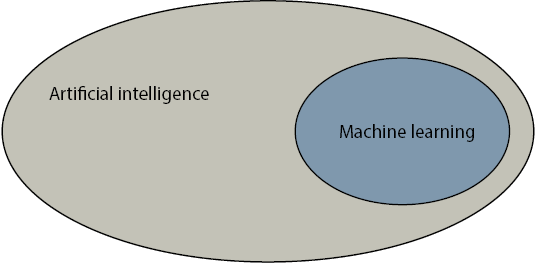
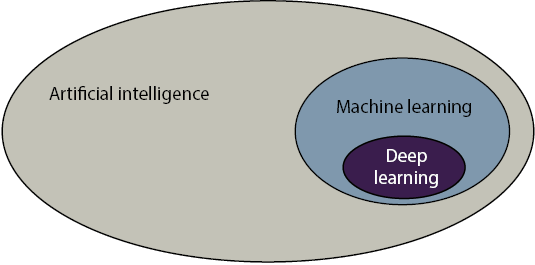
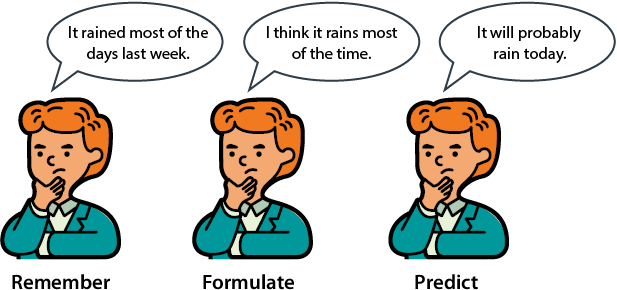
The text clarifies the relationship between AI, machine learning, and deep learning: AI covers any task where computers make decisions; ML is the subset that makes decisions from data (experience); and deep learning is a subset of ML that uses neural networks and powers many state-of-the-art applications. Framing ML as “experience-based” decision-making mirrors how humans often think. This is captured by a simple, recurring process—the remember-formulate-predict framework—where we recall past examples (data), abstract a general rule (model), and use it to forecast outcomes (prediction).

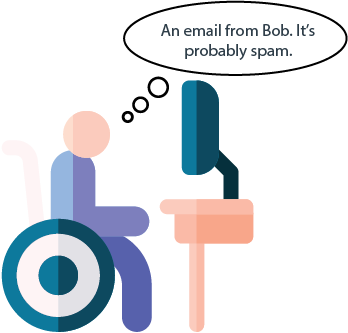
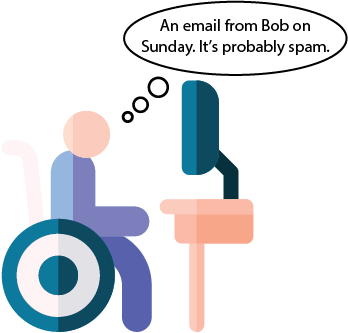
Through a spam-filtering narrative, the chapter shows how models evolve from simple frequency rules to more informative ones using features like day of week, message size, and content signals. It defines key terms: a model is the rule set used to make predictions, an algorithm is the procedure that builds that model, and features are the data properties models rely on. The payoff of ML is that computers can sift through many candidate rules—logical combinations or weighted formulas—to find those that fit data well and, crucially, generalize to new cases. The chapter sets the stage for learning how to evaluate and improve such models, moving from hand-built intuition to scalable, computer-assisted discovery.
Machine learning is a part of artificial intelligence.
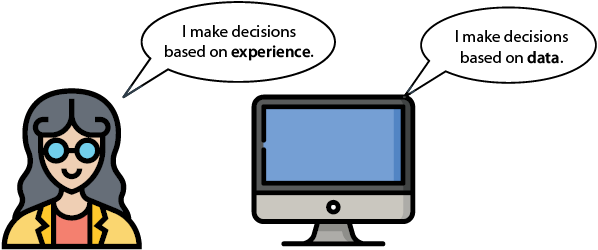
Machine learning encompasses all the tasks in which computers make decisions based on data. In the same way that humans make decisions based on previous experiences, computers can make decisions based on previous data.
Deep learning is a part of machine learning.
The remember-formulate-predict framework is the main framework we use in this book. It consists of three steps: (1) We remember previous data; (2) we formulate a general rule; and (3) we use that rule to make predictions about the future.
A very simple machine learning model
A slightly more complex machine learning model
Another slightly more complex machine learning model
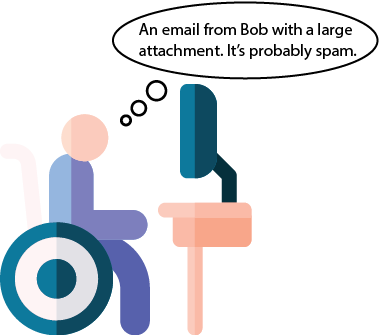
An even more complex machine learning model
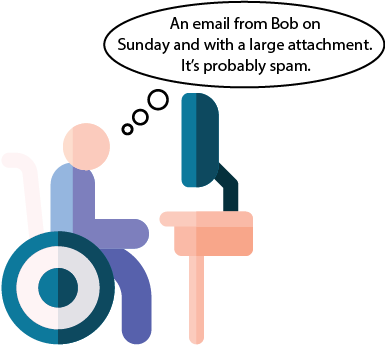
A much more complex machine learning model, found by a computer
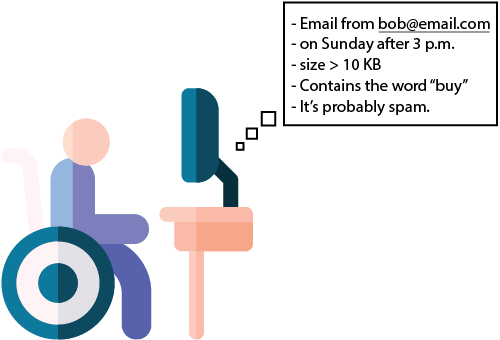
Summary

  • Machine learning is easy! Anyone can learn it and use it, regardless of their background. All that is needed is a desire to learn and great ideas to implement!
  • Machine learning is tremendously useful, and it is used in most disciplines. From science to technology to social problems and medicine, machine learning is making an impact and will continue doing so.
  • Machine learning is common sense, done by a computer. It mimics the ways humans think to make decisions quickly and accurately.
  • Just like humans make decisions based on experience, computers can make decisions based on previous data. This is what machine learning is all about.

Machine learning uses the remember-formulate-predict framework, as follows:

  • Remember: look at the previous data.
  • Formulate: build a model, or a rule, based on this data.
  • Predict: use the model to make predictions about future data.

FAQ

What is machine learning in simple terms?It’s when a computer makes decisions based on data—much like people use past experience to guide choices. In short: common sense, except done by a computer.
How does machine learning differ from artificial intelligence?AI covers any task where a computer makes decisions. ML is a subset of AI focused specifically on making decisions from data.
What is deep learning, and how does it relate to ML?Deep learning is a subset of ML that uses neural networks. It powers many cutting‑edge applications such as image and text recognition.
Do I need advanced math or heavy coding skills to learn ML?No. Basic math helps, but the key ingredients are common sense, visual intuition, and curiosity. Many tools let you do ML with minimal coding.
How do humans and machines make decisions similarly?Both can follow a remember–formulate–predict framework: remember past data, formulate a general rule, then use it to predict future outcomes.
What’s the difference between a model and an algorithm?A model is the set of rules learned from data that we use to make predictions. An algorithm is the step‑by‑step procedure used to build that model.
What is a feature in machine learning?A feature is any measurable property of the data that helps a model make predictions, such as email size, day of week, or the presence of certain words.
Why not just hard‑code rules for tasks like image recognition?For many real‑world problems, explicit rules are too complex to write. ML learns patterns from many examples, making it practical to handle such tasks.
How does a computer actually “learn” from data?It tests many candidate rules or formulas, finds the ones that best fit the training data, and then uses the resulting model to predict on new data—aiming to generalize well.
Can you give a simple real‑life ML example?Spam detection: using features like sender, email size, timing, word counts, or attachments, a model learns rules that classify new emails as spam or ham.

pro $24.99 per month

  • access to all Manning books, MEAPs, liveVideos, liveProjects, and audiobooks!
  • choose one free eBook per month to keep
  • exclusive 50% discount on all purchases
  • renews monthly, pause or cancel renewal anytime

lite $19.99 per month

  • access to all Manning books, including MEAPs!

team

5, 10 or 20 seats+ for your team - learn more


choose your plan

team

monthly
annual
$49.99
$499.99
only $41.67 per month
  • five seats for your team
  • access to all Manning books, MEAPs, liveVideos, liveProjects, and audiobooks!
  • choose another free product every time you renew
  • choose twelve free products per year
  • exclusive 50% discount on all purchases
  • renews monthly, pause or cancel renewal anytime
  • renews annually, pause or cancel renewal anytime
  • Grokking Machine Learning ebook for free

choose your plan

team

monthly
annual
$49.99
$499.99
only $41.67 per month
  • five seats for your team
  • access to all Manning books, MEAPs, liveVideos, liveProjects, and audiobooks!
  • choose another free product every time you renew
  • choose twelve free products per year
  • exclusive 50% discount on all purchases
  • renews monthly, pause or cancel renewal anytime
  • renews annually, pause or cancel renewal anytime
  • Grokking Machine Learning ebook for free
choose your plan

team

monthly
annual
$49.99
$499.99
only $41.67 per month
  • five seats for your team
  • access to all Manning books, MEAPs, liveVideos, liveProjects, and audiobooks!
  • choose another free product every time you renew
  • choose twelve free products per year
  • exclusive 50% discount on all purchases
  • renews monthly, pause or cancel renewal anytime
  • renews annually, pause or cancel renewal anytime
  • Grokking Machine Learning ebook for free